
Magnetic Mines Found on LPG Tanker at Russia's Ust-Luga: What the Arrhenius Discovery Reveals
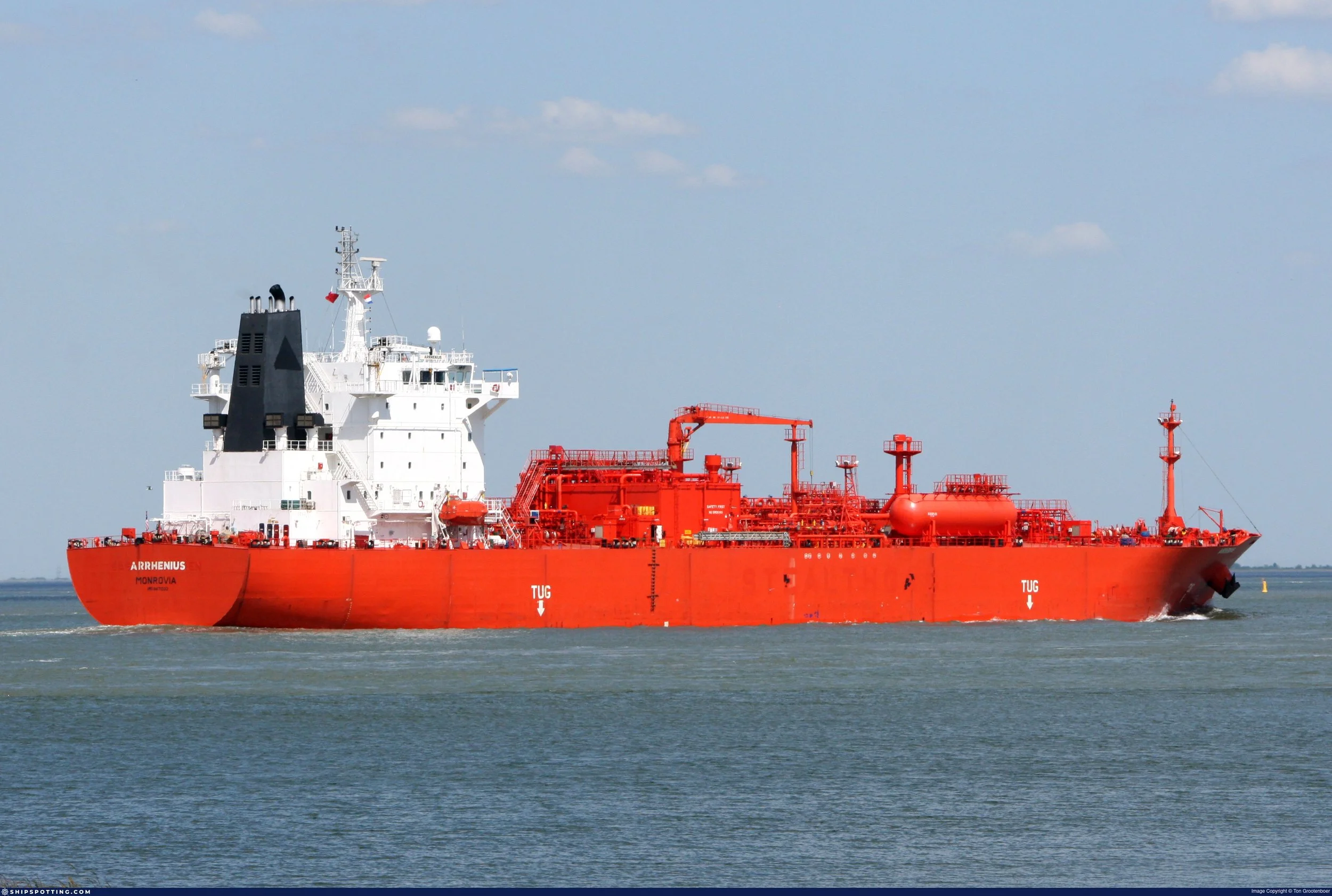
The Arrhenius. Photo courtesy of ShipSpotting.com
Russian divers conducting a routine hull inspection at the Baltic port of Ust-Luga on 20 May found magnetic explosive devices attached to the LPG tanker Arrhenius, which had called from Antwerp four days earlier to load gas. Russia's Investigative Committee announced the discovery on 25 May, claiming the devices were factory-manufactured naval magnetic mines produced in a NATO country — an allegation NATO denied — and opened criminal proceedings on charges of attempted terrorism and illegal trafficking of explosives.
The Arrhenius (IMO 9471032) is a Liberia-flagged LPG tanker of 26,645 dwt, managed by UAE-based Maple Mariner Holding. It entered Ust-Luga on 20 May and was due to depart laden for the Turkish Black Sea port of Samsun, according to Splash247, which reported the disclosure on 26 May. Reuters reported that divers found devices positioned near the engine room on the vessel's outer hull. Russian sources reported several devices; other reporting, including Belgian and Maritime Executive coverage, specified two. Each device reportedly contained approximately 7 kg of plastic explosive. All were deactivated by FSB personnel working alongside Russia's Ministry of Defence and National Guard.
Investigative Committee spokeswoman Svetlana Petrenko stated that the mines "could not have been installed in Russia's territorial waters," pointing implicitly to the vessel's transit route and its previous port call. Investigators noted that the Arrhenius arrived at Ust-Luga roughly a day and a half behind schedule, and that during questioning the ship's captain disclosed an unexplained anchorage period at Antwerp — attributed at the time to an alleged port workers' strike. Russia's investigators described that gap as significant to their inquiry, according to Splash247. The Antwerp anchorage as the suspected installation window is a line of inquiry being pursued by Russian investigators, not a confirmed finding. A NATO official denied involvement, telling Reuters: "NATO has not mined any tanker."
Ust-Luga, located on the Gulf of Finland roughly 170 kilometres west of St Petersburg, is Russia's largest Baltic port and a primary hub for crude, petroleum products, and LPG exports. It has been subjected to repeated disruption over the past eighteen months. In February 2025, the Suezmax tanker Koala ran aground at Ust-Luga after a blast in its engine room — an incident investigators linked to a limpet mine. Ust-Luga subsequently intensified its hull inspection regime, and Bloomberg reported in July 2025 that the port was requiring mandatory diver checks before vessels were permitted to enter the facility — part of a broader pattern following a series of suspected sabotage incidents involving Russian tankers that prompted Moscow to order port-wide inspections across its facilities. Ukrainian drone strikes have also struck Ust-Luga's oil terminal infrastructure on multiple occasions, including in August 2025 and March 2026.
The Arrhenius incident is distinct in method and geography from those drone strikes. If Russia's account is accurate, it represents a shift from attacking fixed infrastructure to targeting transiting vessels — specifically an LPG carrier mid-route in European waters. LPG tankers carry pressurised gas in a form that, in the event of a hull breach near an ignition source, carries significant explosion and fire risk alongside the structural damage itself. The reported placement near the engine room, as described by Russian officials to Reuters, would be consistent with an attempt to disable propulsion or cause serious machinery-space damage.
The practical effect of the Ust-Luga mine regime is already visible in commercial operations. Ust-Luga and other key Russian Baltic ports now require mandatory diver hull inspections before entry, a procedure that adds time and cost to port calls and has prompted some operators to reassess which Russian terminals they are willing to serve. War-risk premiums for vessels operating in Russian Baltic waters have remained elevated since the onset of the broader conflict, and incidents of this type — whether ultimately proven or not — sustain that pressure. Baird Maritime reported the vessel details and mine specifications drawn from the same Reuters feed.
The investigation is ongoing. Russia's Investigative Committee has charged unknown persons and has not named any state as responsible. Independent verification of the Russian claims regarding the origin of the devices has not been made public. The vessel remains at Ust-Luga pending the completion of forensic work, and its scheduled voyage to Samsun has been delayed.
MariTrace tracks vessel movements and security incidents across the Baltic, Black Sea, and Northern European corridors; you can explore the platform here.
Sources
Splash247 — Magnetic mines found on hull of LPG tanker at Russian port of Ust-Luga (26 May 2026)
Reuters / gCaptain — Russia Says Magnetic Mines Found On Tanker At Ust-Luga Port (25 May 2026)
Reuters / US News — Russia Says Magnetic Mines Found on Tanker at Ust-Luga Port (25 May 2026)
Bloomberg / gCaptain — Russia's Ust-Luga Port Orders Vessel Checks After Mystery Blasts (July 2025)
Bloomberg / gCaptain — Russia's Ust-Luga Port Takes New Damage In Ukraine Drone Attack (March 2026)
Bloomberg / gCaptain — Ukraine Claims Drone Strike On Russian Ust-Luga Port (August 2025)