
Two Laden Capesizes Collide at Dawn in the Singapore Strait
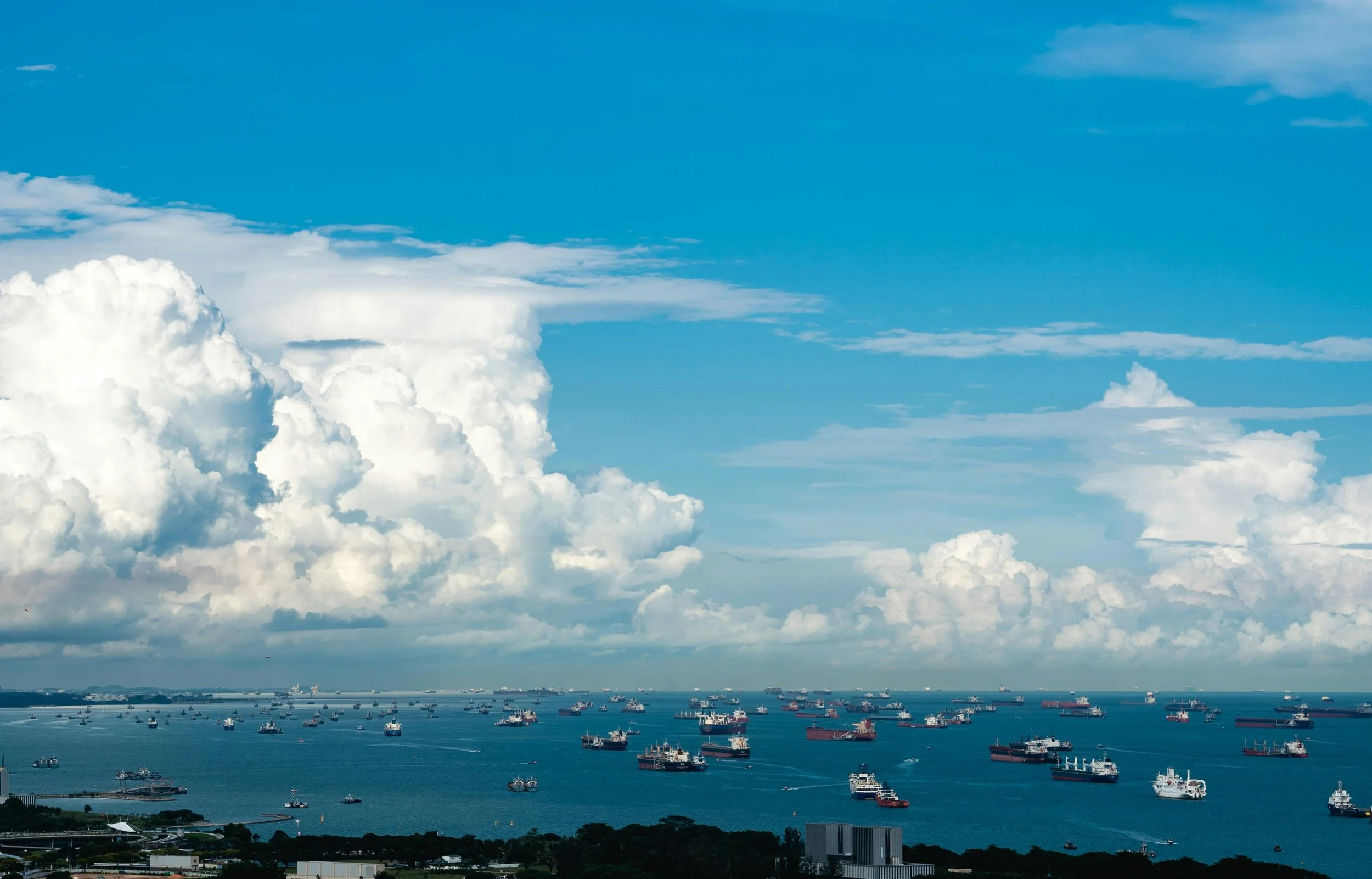
Vessels in Singapore's Grand Harbour.
Two heavily laden Capesize bulk carriers collided in the Singapore Strait shortly before 0700 local time on Wednesday 20 May, with one vessel still anchored in the TSS separation zone as of Thursday 21 May, attended by tugs. No injuries or pollution had been reported by available casualty reporting at the time of writing.
The Marshall Islands-flagged Cape XL (IMO 9590826, around 181,500 dwt) had arrived at the Changi Bay anchorage at 1530 on Tuesday 19 May to take on bunker fuel. The Maritime Executive reports that she got under way shortly before 0700 on Wednesday morning and headed south towards the shipping lanes. At the same time, the Capesize bulk carrier Huge Kumano (IMO 9889277) was transiting eastbound through the eastbound lane of the traffic separation scheme at nine knots. Cape XL's bow struck Huge Kumano's port side amidships. The two vessels locked together and drifted eastwards through the TSS before being separated. Both went to anchor nearby; as of Thursday 21 May, Huge Kumano remained anchored in the TSS separation zone, attended by two tugs. Cape XL was bound for Qingdao, China, and was carrying bauxite; Huge Kumano was carrying iron ore, according to casualty reporter W.E. Cox.
The Changi Bay anchorage — described by The Maritime Executive as "famously busy" — sits at the eastern mouth of the Malacca and Singapore Straits complex, through which an estimated 70 per cent of Asia's oil imports flow alongside hundreds of millions of tonnes of dry bulk cargo annually. The Malacca and Singapore Straits complex handles an estimated quarter to a third of global seaborne trade. When large vessels depart the anchorage and join the TSS, the margin for navigational error is narrow — the separation zone itself is less than a nautical mile wide at the Phillip Channel.
The collision comes at a period of sustained pressure on this chokepoint. Since the Strait of Hormuz closed to most commercial traffic in early March, bulk carriers and container vessels have been re-routing via the Cape of Good Hope and calling at Singapore in greater numbers. Port congestion has been building at Singapore since March, with dwell times lengthening and berth wait times rising, according to Xeneta. Seavantage has also reported elevated vessel concentration at regional hubs including Singapore in reporting linked to the wider Hormuz disruption. More vessels anchored at Changi Bay for extended periods have added to traffic density in the TSS approaches — context for the collision rather than a stated cause, but nonetheless a factor shaping navigational risk in the anchorage approaches.
The strait has also seen a persistent sea robbery problem running alongside the traffic surge. According to Lloyd's List, the Straits of Malacca and Singapore recorded 108 incidents of armed robbery in 2025 — the highest figure in 19 years. ReCAAP's Q1 2026 report, published in April, recorded 16 incidents across Asia in the first three months of the year, including 10 in the Straits of Malacca and Singapore. Three incidents were reported in the Phillip Channel in March alone, prompting ReCAAP to issue an incident alert. The South China Morning Post reported on 5 May that a Marshall Islands-flagged tanker, the Taipan, was boarded by four armed men in the Singapore Strait on the night of 22 April — the 16th incident recorded in the SOMS that year. Perpetrators typically operate against slow-moving or anchored vessels in the hours of darkness, targeting engine spares and scrap metal.
One capability gap in the regional response became wider earlier this year. In January 2026, the United States withdrew from ReCAAP — the regional information-sharing body that co-ordinates piracy and armed robbery reporting across Asian waters — as part of a broader withdrawal from 66 multilateral organisations. WorldCargoNews noted at the time that the move raised questions about the impact on regional information-sharing capacity, at a point when incident volumes in the strait remain above pre-2024 levels.
As of the morning of 21 May, Cape XL and Huge Kumano were both at anchor in and adjacent to the Singapore Strait. Huge Kumanoremained in the TSS separation zone, attended by tugs. Both vessels were laden — Cape XL with bauxite, Huge Kumano with iron ore. No MPA Singapore statement on the collision had been published at the time of writing, and no environmental release had been reported by available casualty reporting.
MariTrace tracks vessel movements and AIS anomalies across the Malacca and Singapore Straits; the platform is at maritrace.com.
SOURCES
Two Capesize Bulkers Collide in Singapore Strait — The Maritime Executive, 20 May 2026
Robberies in Strait of Malacca at highest level in 19 years — Lloyd's List
Loss Prevention Update: ReCAAP Q1 Report January–March 2026 — Britannia P&I
Strait of Hormuz Shutdown: Port Congestion and Schedule Chaos — Xeneta
Strait of Hormuz Crisis 2026: Full Timeline & Ocean Freight Impact — Seavantage
U.S. Withdraws From 66 UN Organizations, Including ReCAAP and UNCTAD — The Maritime Executive
US withdraws from UNCTAD, ReCAAP amid wider pullback from global initiatives — WorldCargoNews