
MSC Confirms Container Ship Hit Twice by Projectiles Off Iraq as Gulf Attacks Escalate
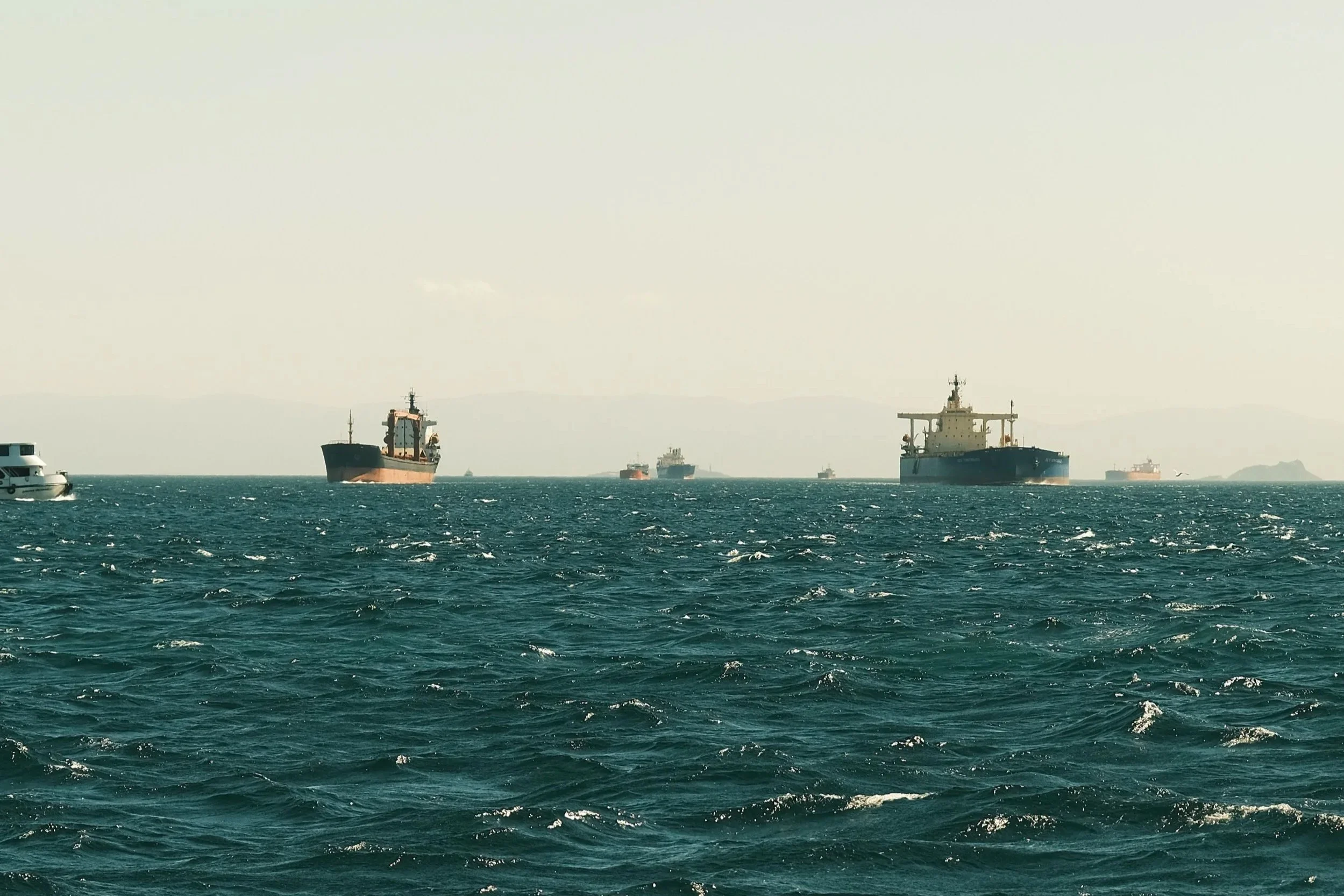
Ships waiting
Mediterranean Shipping Company has confirmed that its containership MSC Sariska V was struck by two projectiles while departing Iraq's port of Umm Qasr on 1 June, with no injuries among the crew. Iran's Islamic Revolutionary Guard Corps claimed responsibility, describing the attack as retaliation for the American strike on a Gambia-flagged cargo vessel, reported as Lian Star or Lion Star, three days earlier. Later on 2 June, US Central Command said Iran had launched missiles and drones at Kuwait, Bahrain and civilian mariners near the Strait of Hormuz.
The sequence aboard the Sariska V was unusually specific. According to MSC, the first projectile hit while a pilot was on board during departure, and a second struck the crew accommodation area shortly afterwards. UKMTO placed the incident roughly 40 nautical miles southeast of Umm Qasr, reporting a large explosion on the starboard side followed by a second impact and a fire the crew extinguished. The Panama-flagged, 4,830 TEU vessel was deployed on MSC's Gulf Shuttle service, heading from Iraq to Qatar, a rotation it was already working before the conflict; like many vessels operating inside the Gulf, it has remained behind the Strait of Hormuz since the waterway closed. There is a discrepancy in early reporting: Iraqi broadcaster Alsumaria, citing a security source, initially said the explosion near buoy five was caused by a mechanical fault inside the vessel with no indication the ship had been targeted — an account contradicted by the IRGC's own subsequent claim of responsibility.
That claim, carried by Iranian state media, framed the attack as a response to the US military's action against the vessel the IRGC identified as Lian Star (rendered Lion Star in MSC's statement and some reports). CENTCOM said a US aircraft fired a Hellfire missile into the engine room of the Gambia-flagged ship on 29 May after it ignored more than 20 warnings while heading for an Iranian port, in enforcement of the US blockade; as of 1 June the command said its forces had disabled five commercial vessels and redirected 121 others during blockade operations, per Marine Log. MSC rejected the IRGC's framing outright, calling the strike on its ship "completely unjustified" and stressing that it is a neutral carrier, headquartered in Switzerland and owned by the family of founder Gianluigi Aponte, with no affiliation to the United States or Israel. MSC has nonetheless been a recurring target in this conflict: Iran seized two of its vessels in late April and, according to The Maritime Executive, continues to hold the MSC Aries, taken near the Strait of Hormuz in April 2024; the Aries' crew was released in stages in 2024. The weapon has not been confirmed: UKMTO and MSC refer only to projectiles, Iranian media have reportedly described a missile, and analysts quoted in trade press suggest the damage pattern may instead point to an uncrewed surface vessel.
The attack did not stay isolated. On 2 June, CENTCOM said Iran launched missile and drone strikes on Kuwait, Bahrain and civilian mariners near the Strait of Hormuz, while the IRGC said it had targeted the headquarters of the US Fifth Fleet in Bahrain and a vessel Iranian media identified as the Panaya. US forces struck an Iranian military ground control station on Qeshm Island in response. Kuwait's foreign ministry said one person was killed and that a terminal building at Kuwait International Airport was severely damaged; reports differ on whether the airport was directly targeted or struck by failed or intercepted projectiles, according to the same report.
The diplomatic track continues alongside the exchanges of fire. Secretary of State Marco Rubio told the Senate Foreign Relations Committee on 2 June that Iran must reopen the Strait of Hormuz and commit to talks curtailing its nuclear programme before Washington lifts its blockade of Iranian ports or eases sanctions. Shipowners gathered at Posidonia this week were blunt about what any deal must contain before tonnage returns: defined transit rules, security guarantees and mine clearance. Transiting the strait without clear rules of engagement is, in the words of Centrofin chief executive Yiannis Procopiou, "a very high risk proposition".
As of writing, the Sariska V's crew is safe and the incident is under investigation by the authorities. The ceasefire framework formally remains in place even as both sides trade fire around the Gulf's commercial arteries. For operators still inside the Gulf, the Sariska V offers a concrete data point: a neutral-flag feeder vessel on an intra-Gulf rotation, struck twice with a pilot aboard. That is the operating environment in the northern Gulf this week.
MariTrace tracks vessel movements and security incidents in this region; you can explore the platform here.
Sources
MarineLink — MSC Confirms Container Ship Hit by Projectiles in Iraqi Port
The Maritime Executive — Video: MSC Boxship Holed During Two Attacks by IRGC While Sailing off Iraq
Iran International — Panama-flagged vessel hit by explosion near Iraq's Umm Qasr
The Loadstar — MSC says Iran attack on its box ship was 'completely unjustified'
Marine Log — CENTCOM Hellfire missile strike disables would-be blockade buster
gCaptain — Shipping Industry Says Hormuz Peace Deal Alone Won't Bring Ships Back