
Vessel Traffic Through the Strait of Hormuz Falls Dramatically After Radio “Closure” Broadcast
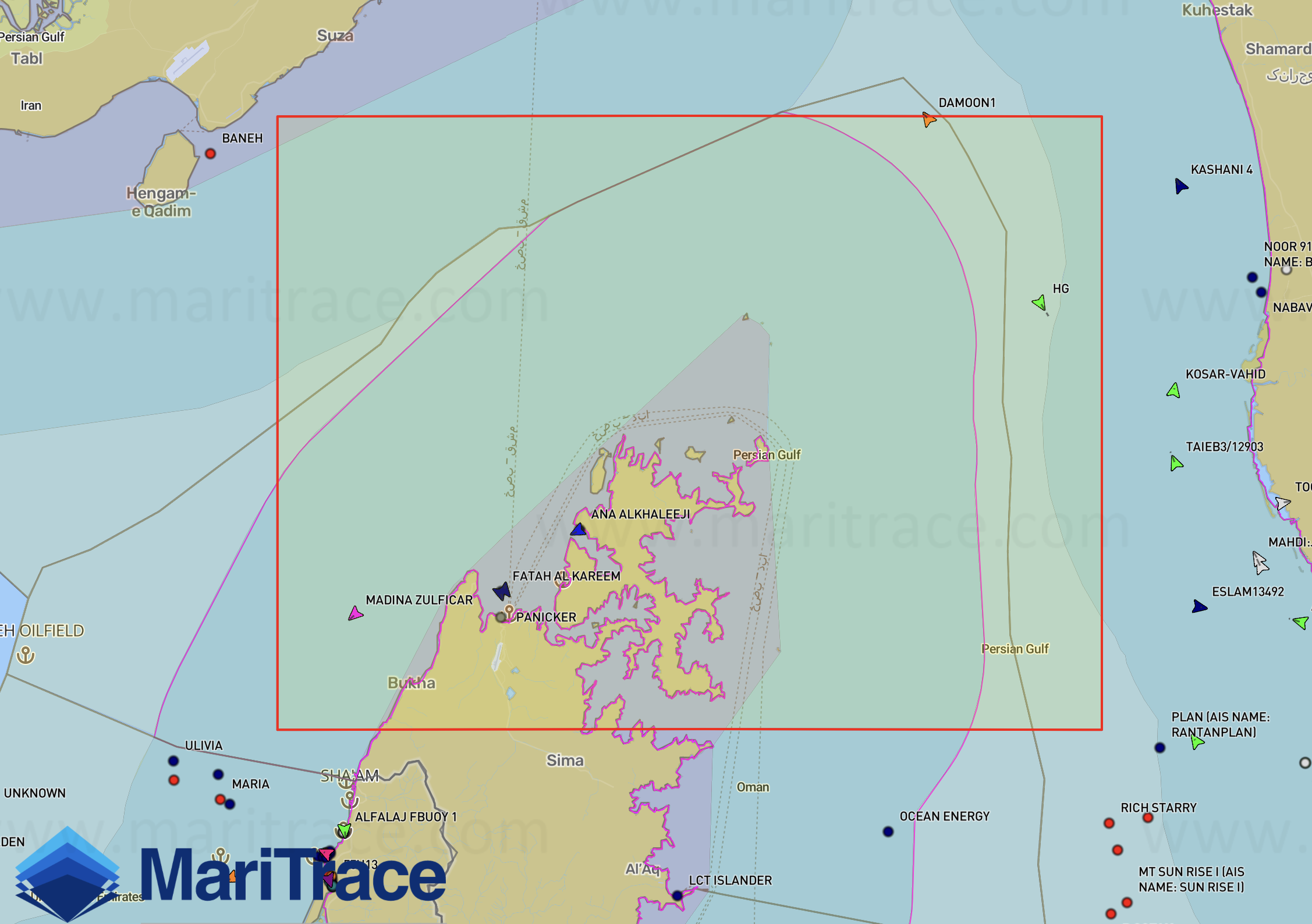
The Strait of Hormuz area used for analysis
Over the weekend, tensions in the Gulf escalated sharply following coordinated US and Israeli strikes against Iran, triggering retaliation, regional military activity, and heightened risk alerts for commercial shipping. Iran confirmed damage to key facilities and vowed a response, while multiple countries warned vessels operating in Gulf waters to exercise extreme caution. (Reuters)
The Strait of Hormuz — one of the world’s most strategically vital maritime chokepoints and a corridor for roughly one-fifth of global oil supply — sits at the centre of these developments. (Business Insider)
A Warning Without Legal Authority
On 28 February, ships operating in Gulf waters reported receiving radio transmissions stating that the Strait of Hormuz had been closed. Maritime security authorities later confirmed such broadcasts had been heard but stressed that no official closure had been issued through recognised maritime channels. (Argus Media)
The UK Maritime Trade Operations (UKMTO) centre emphasised that these transmissions were not legally binding and could not be independently verified. (Ship & Bunker). Under international law, ships have a right of transit passage through straits used for international navigation, and coastal states must not hamper or suspend that passage. (UNCLOS Part III)
Industry Reaction
Shipping markets responded quickly to the heightened threat environment:
Tanker owners and energy traders paused shipments through the strait. (MarketScreener)
Several vessels were observed waiting near regional ports rather than transiting. (MarketScreener)
Some national shipping operators instructed fleets to halt Hormuz passages entirely. (Business Recorder)
Major carriers began suspending or rerouting voyages in the wider region. (Reuters)
Reports of vessels being struck or targeted near the strait reinforced operator caution. (Daily Sabah)
Observed Traffic Collapse in the Transit Corridor
MariTrace analysed hourly vessel activity within the primary navigation channel used for Hormuz transits (defined here as latitude 26.1–26.7 and longitude 56–56.9).
Traffic levels were stable through 26–27 February, typically ranging between 40 and 55 vessels per hour.
At approximately 15:19 on 28 February — the timestamp of the circulated broadcast recording — vessel counts remained within normal ranges. Within hours, however, traffic began to fall sharply.

Count of vessels in the Strait of Hormuz area, as defined above.
By late evening on 28 February, hourly counts dropped into the low twenties. Overnight and into 1 March, activity declined further, frequently falling below ten vessels. At several points, observed traffic dropped to just one vessel per hour, representing a reduction of more than 90% compared with baseline levels.
Importantly, the decline affected cargo vessels and tankers alike, suggesting a systemic operational slowdown rather than sector-specific disruption.
The Strait of Hormuz was never formally closed. Yet the combination of military escalation, reported incidents, and an unverified broadcast warning coincided with one of the sharpest short-term reductions in vessel traffic observed in the corridor in recent years.
For maritime operators, charterers, insurers, and analysts, the episode underscores a critical operational reality: in high-risk regions, behaviour changes not only in response to official notices, but also in response to perceived threat signals and real-time intelligence.
Data for this analysis was derived from MariTrace vessel-tracking systems monitoring global maritime activity in real time.