
Iran's Sanctioned Crude Finds a Transit Hub Off Malaysia as Enforcement Reach Falls Short
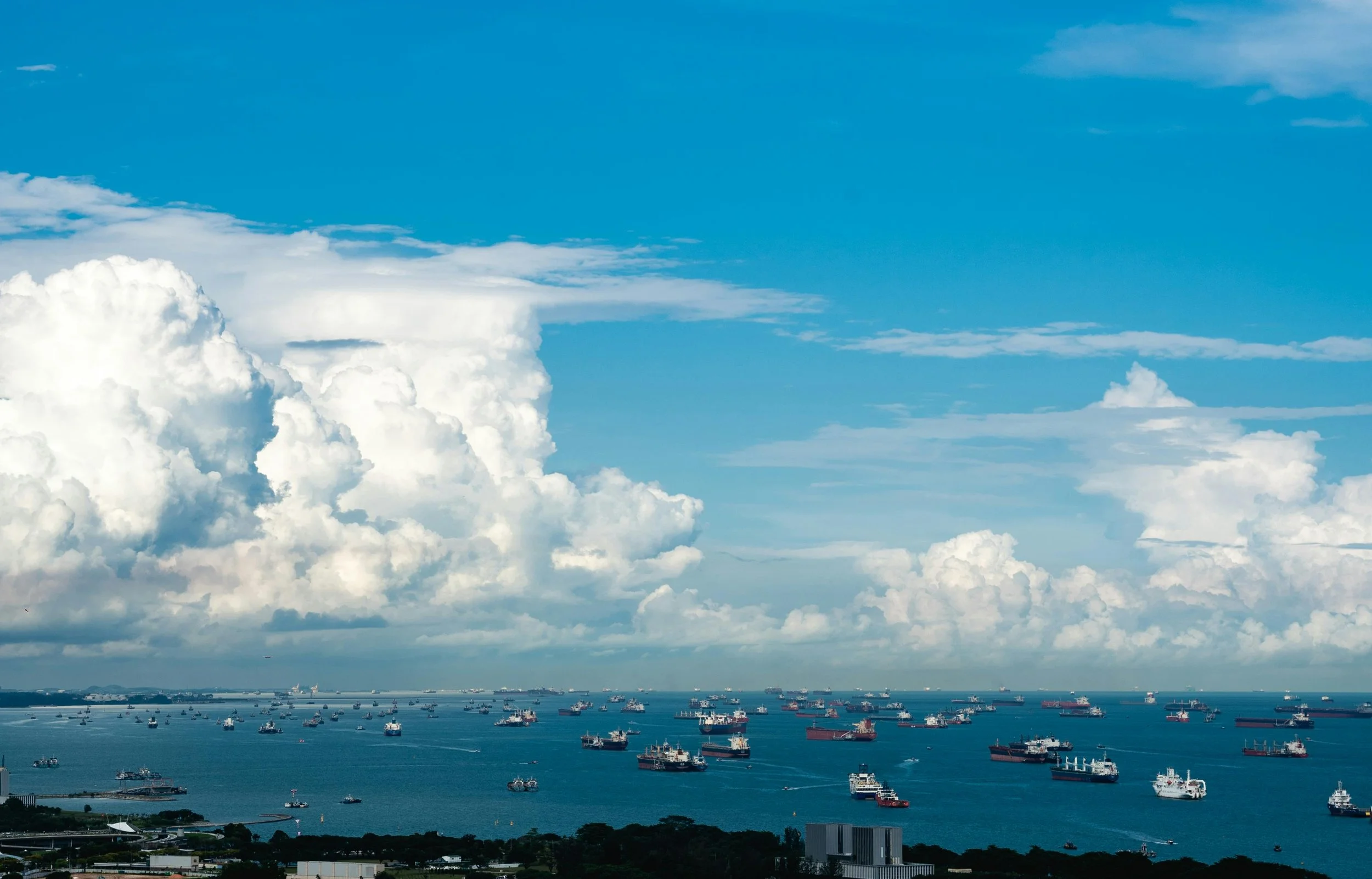
Singapore Strait waters showing multiple large tankers anchored in open water
Since the United States and Israel struck Iran on 28 February, an unremarkable stretch of South China Sea water roughly 70 kilometres off Malaysia's Johor coast has become one of the most active transfer points for Iranian sanctioned crude in the Indo-Pacific. Malaysia's maritime enforcement agency confirmed publicly this week that the activity is structured to exploit a jurisdictional gap it cannot close under current law.
The area in question is the Eastern Outer Port Limits, or EOPL — a commercial anchorage at the edge of Malaysia's exclusive economic zone that borders Indonesia's Riau Archipelago. United Against Nuclear Iran (UANI), which tracks tanker movements via satellite imagery, counted 42 ship-to-ship crude transfers in the EOPL between 28 February and 13 May — roughly one every two and a half days. As of 13 May, 28 tankers listed on UANI's ghost fleet tracker were anchored or loitering in the vicinity with AIS transponders active. At least 32 Iran-flagged vessels have reached the EOPL area since the conflict began.
The EOPL has served as an STS transfer hub for years, but the operational tempo has changed markedly since the Iran war began. In the standard pattern, Iranian-origin crude is transferred from tankers that have departed Kharg Island or other Iranian terminals to intermediary carriers that then continue to China — widely reported as the buyer of about 90 per cent of Iranian oil. The EOPL sits almost exactly halfway along the Iran–China sea route, making it a natural waypoint. Many of the vessels involved operate with disabled or degraded AIS, unknown insurers, and opaque ownership structures, as documented by CNN in a detailed feature on the anchoragepublished on 27 April.
The continued presence of Iranian crude at the EOPL despite severe disruption to Hormuz traffic reflects two overlapping factors. Windward's tracking data indicates Hormuz traffic and Iranian export activity remain heavily constrained, but satellite imagery has identified multiple dark commercial transits — vessels running without broadcast transponders — sustaining a reduced but non-zero export flow. Windward estimated Iranian crude export volume for the week of 4–10 May at approximately 2.68 million barrels, well below pre-war levels. Much of the inventory now moving through the EOPL also reflects cargo loaded and positioned at sea during earlier, lower-disruption phases of the conflict, when Iranian terminals were still lifting at closer to normal rates.
The Malaysian Maritime Enforcement Agency's Director-General, Rosli Abdullah, addressed the issue directly in remarks to the Associated Press, reported on 13–14 May. He acknowledged that transfers are "conducted outside Malaysia's territorial waters and in remote areas beyond radar coverage" and that their geographic placement is "intended to exploit jurisdictional gaps and limit direct enforcement action by local authorities." Malaysia, he said, enforces only its own maritime safety and environmental ordinances — not US, UK, EU, or UN sanctions. The US State Department declined to comment; the Iranian embassy in Kuala Lumpur did not respond to the AP's requests.
The limits of Malaysian enforcement were demonstrated concretely on 29 January, when a Penang State Maritime patrol intercepted two tankers conducting an unauthorised STS transfer 24 nautical miles off Muka Head. The vessels — the false-flagged MV Nora (IMO 9237539) and the sanctioned Cameroon-flagged Rcelebra (IMO 9286073) — were detained along with 53 crew members. Authorities announced the seizure of approximately USD 130 million in crude oil. Both masters were arrested. Days later, Maritime Executive reported that both vessels had been released on payment of a bond of approximately USD 76,000 each — the statutory maximum Malaysia can impose for an unauthorised STS transfer under domestic maritime law. The Rcelebra, apparently still laden, subsequently transited the Malacca Strait and anchored off Johor, according to gCaptain.
UANI adviser Charlie Brown told the Associated Press that Malaysia risks becoming "a facilitator rather than merely a transit point" for illicit crude flows, and that the enforcement outcome after the Penang interception illustrates the business model's resilience. Rosli rejected that characterisation, saying UANI's allegations did not reflect "operational realities" on the ground, and that MMEA has never provided special treatment to any country. Indonesia's foreign ministry said on 13 May that it is reviewing the situation in the adjacent Riau waters, which overlap with part of the EOPL operating area.
Singapore, which has issued the region's clearest public warnings about shadow fleet activity near the straits and implements UN Security Council resolutions, has called for international enforcement cooperation but has no unilateral reach into the EOPL area, which sits outside its territorial waters. No formal changes to enforcement posture have been announced by any of the three littoral states.
The EOPL anchorage continues to operate in open view: vessels carrying active AIS are visible on commercial tracking platforms, UANI publishes satellite-confirmed transfer counts weekly, and the gap between what surveillance systems document and what any single coastal authority can act on is, for now, unresolved by law, treaty, or enforcement agreement.
MariTrace tracks vessel movements and shadow fleet activity across the Malacca and Singapore Straits and the broader Indo-Pacific; the platform is available here.