
Iran Reportedly Seizes Anti-Piracy Armory Vessel Off Fujairah, Disrupting Private Security Operations in Gulf of Oman
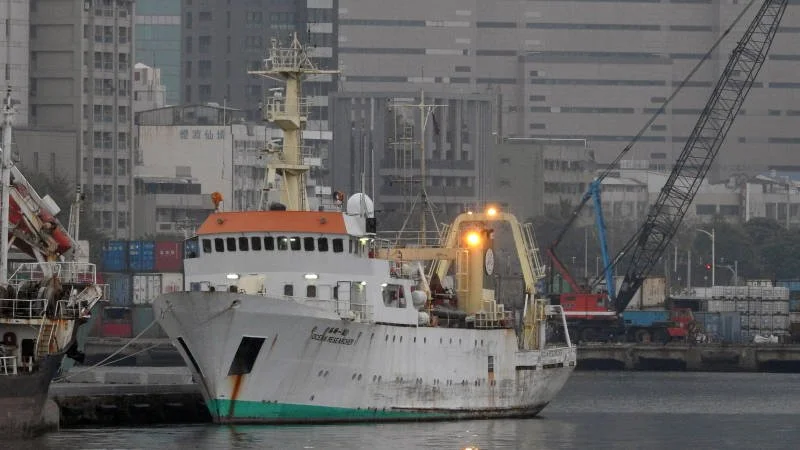
The vessel Hui Chuan. Image courtesy of ShipSpotting.Com
On 14 May 2026, a vessel was boarded by what UKMTO Warning 057/26 described as "unauthorised personnel" while at anchor approximately 38 nautical miles northeast of Fujairah and was subsequently diverted into Iranian territorial waters. The vessel's AIS signal went dark shortly after. Maritime security consultancy Vanguard Tech and two consultants cited anonymously by Bloomberg independently identified the vessel as the Hui Chuan — and identified it as a vessel-based armory, floating infrastructure used by private maritime security companies (PMSCs) to stage weapons and personnel in the Gulf of Oman. Hong Kong-based Sinoguards confirmed in a statement on 15 May that Iranian forces had taken one of its ships into Iranian waters, naming it as the Hui Chuan.
Vessel-based armories (VBAs) occupy a practical but legally ambiguous niche in the maritime security industry. PMSCs operating in high-risk waters use them to store arms, ammunition, and contractor personnel between client vessel transits, avoiding the legal difficulties that arise when weapons are brought ashore in regional ports — where local firearms laws can result in seizures, arrests, and prosecuted contractors. The Hui Chuan is a 1984-built vessel flagged in Honduras and nominally registered to a Marshall Islands letterbox company, according to The Maritime Executive. Its VBA function was confirmed independently by maritime security consultancy Vanguard Tech and, separately, by two consultants cited anonymously by Bloomberg.
Hong Kong-based Sinoguards — the vessel's operating firm, established in 2013 and focused on recruiting ex-service personnel from Ukraine and Nepal — confirmed the seizure in a statement on 15 May. The company described the situation as a "documentation and compliance inspection" in Iranian waters, and referred to the Hui Chuan as an "offshore work platform vessel," diverging from the VBA characterisation given by independent consultants. "We are cooperating fully with the appropriate authorities and have submitted the requested vessel and crew documentation," the statement read, adding there was no indication of crew injuries. Sinoguards maintains a permanent base in Fujairah and provides armed escort and security services for vessels transiting the Indian Ocean and Gulf of Oman.
The seizure sits uneasily alongside statements made by Iranian officials on the same day asserting that Chinese vessels were permitted to transit the Strait of Hormuz. China is the largest buyer of Iranian crude, and the two governments have sustained close commercial ties throughout the crisis that began on 28 February. Sinoguards is a Hong Kong-based company, and the Hui Chuan was registered to a Marshall Islands entity. Whether the seizure reflected deliberate policy, a failure of coordination within Iranian command structures, or opportunistic action by local IRGC naval units is not established in any public source.
The Hui Chuan was not the only vessel affected near the strait that day. UKMTO Warning 058/26 reported an attack on an Indian-flagged livestock carrier near Limah, Oman; the vessel suffered an explosion, lost stability, and sank. All 14 crew were recovered by the Omani Coast Guard, and India's ministries of Foreign Affairs and Shipping confirmed the rescue while condemning the ongoing targeting of civilian mariners. UKMTO also noted that mines in and near the Traffic Separation Scheme continue to pose a hazard, alongside persistent GNSS interference in the area. In response to the cumulative threat environment, the UAE announced it would accelerate construction of a pipeline from its Gulf-side terminals to the port of Fujairah — on the Gulf of Oman side of the strait — to reduce exposure to Hormuz transit risk.
Commercial transits through the strait remained sharply curtailed. SynMax satellite data showed approximately ten vessels crossing per day as of 15 May, against a pre-war baseline of 125 to 140 daily passages. Isolated crossings have been recorded: the Liberia-flagged suezmax Karolos, managed by Greek firm Dynacom and laden with crude from Basra oil terminal, crossed the strait on 14 May and was tracking towards Sikka, India, according to analysis from Kpler and SynMax. Oil prices rose approximately two percent to around $108 per barrel on 15 May as markets assessed the continued absence of a diplomatic resolution. Talks between Iran and the United States — conducted via Pakistan as intermediary — have been on hold since late April, with each party rejecting the other's most recent proposals.
U.S. President Trump returned from two days of meetings with China's Xi Jinping in Beijing — the talks took place on 14 May — stating publicly that Xi had agreed the Strait of Hormuz must reopen and that China would not supply Iran with military equipment. China gave no indication it would weigh in directly with Tehran, and its foreign ministry restricted its public statement to the observation that the conflict "has no reason to continue." More than 20,000 seafarers remain stranded inside the strait, according to the International Transport Workers' Federation, many running short of food, water, and fuel. The Hui Chuan remained inside Iranian waters as of 15 May, with no indication from any party of the terms or timeline for its release.
MariTrace tracks vessel movements and security incidents across the Gulf of Oman and Strait of Hormuz; you can explore the platform here.
Sources
UKMTO Warns Ship Seized Near Hormuz Is Being Taken Toward Iran — gCaptain (Mike Schuler), 14 May 2026
Report: Vessel Captured off Fujairah is a Floating Armory — The Maritime Executive, 14 May 2026
Iran Seizes Chinese-Owned 'Floating Armory' Ship Near Hormuz — gCaptain (Bloomberg), 15 May 2026
Greek-Operated Tanker Breaks Through Hormuz Gridlock — gCaptain (Reuters/Jonathan Saul), 15 May 2026
Trump Says Patience With Iran 'Running Out' After Xi Talks on Hormuz — gCaptain (Reuters), 15 May 2026